Source wet pressed pulp molded beauty packaging for cosmetics, skincare, and personal care
Find 30 verified options for wet pressed pulp molded beauty packaging designed for cosmetic, skincare, and personal care applications. Buyers can compare specifications, materials, and customization features to select the right molded pulp inserts for their needs.
Key considerations
Products List
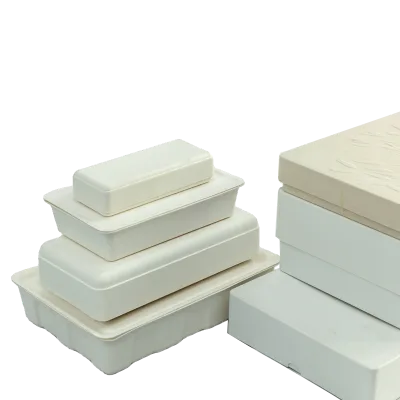
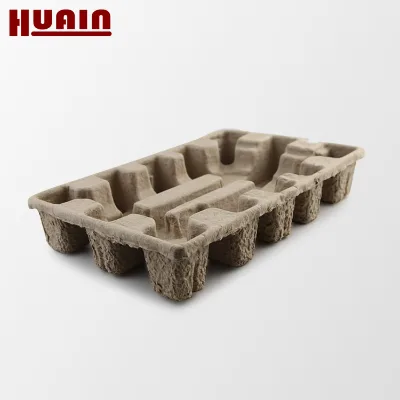
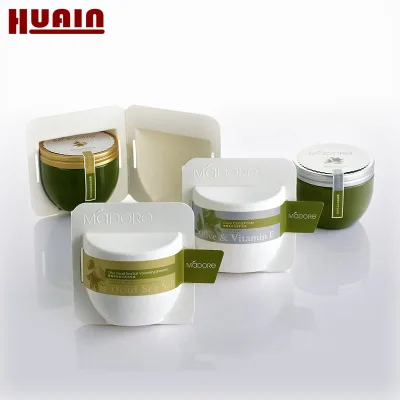


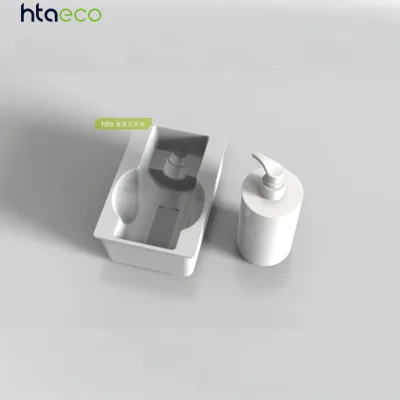
Comprehensive Sourcing Guide
Strategic Sourcing Guide for Wet Pressed Pulp Molded Beauty Packaging
The beauty and cosmetics industry is undergoing a significant transformation driven by sustainability mandates and consumer demand for eco-conscious packaging. Wet pressed pulp molded packaging has emerged as a primary solution for brands seeking to replace plastic inserts, trays, and protective structures. This guide provides a disciplined, evidence-based approach to sourcing wet pressed pulp molded beauty packaging, focusing on technical specifications, material integrity, and supplier evaluation criteria derived from current market observations.
Technical Specifications and Material Composition
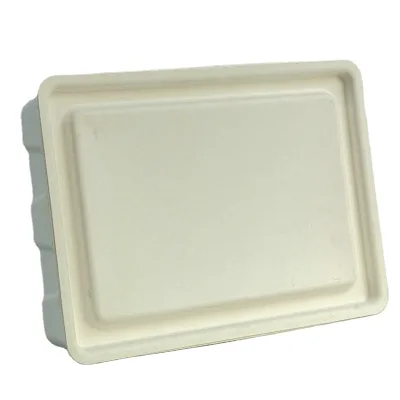
Understanding the technical architecture of wet pressed pulp molded packaging is the first step in effective procurement. The core manufacturing technique, identified in current market data as "Wet Press Pulp Molding," involves the formation of fiber mats from a slurry of cellulose fibers, which are then pressed and dried under heat and pressure. This process distinguishes the product from dry-formed alternatives, offering superior density and structural rigidity essential for protecting delicate cosmetic items.
The material composition is a critical differentiator. While the primary raw material is often cited as "Recycled Paper Pulp" or "Cellulose Acetate," buyers must verify the specific fiber source for each order. The observed data indicates a reliance on "Mechanical Pulp" and "Paperboard" types, which provide the necessary stiffness for inserts. However, the presence of "Cellulose Acetate" in some listings suggests a hybrid approach or specific biodegradable formulations that require distinct processing parameters.
Dimensional precision is paramount for beauty packaging, which often houses irregularly shaped bottles and jars. Market observations reveal a wide range of customizable dimensions, with specific model examples showing sizes such as 14106 cm and 1487016mm. The thickness of the molded pulp is another vital specification, with observed values around 0.05 mm. This thinness is achievable through the wet pressing technique but requires precise control to ensure the tray does not collapse under the weight of the product. Buyers should request detailed engineering drawings that specify the exact thickness, wall density, and internal cavity dimensions to ensure a perfect fit for their specific SKUs.
Compliance, Certification, and Environmental Claims
Sourcing eco-friendly packaging requires rigorous verification of environmental claims. The market data highlights several key attributes, including "Recycled Materials," "Compostable Eco-friendly," and "100% Biodegradable." While these are strong selling points, they are not universal guarantees across all suppliers. A buyer must distinguish between products that are merely "Recyclable" and those that are truly "Biodegradable" or "Compostable" under specific conditions.
The bleaching process is another area requiring scrutiny. Some products are listed as "Bleached," which often implies the use of chemical processes to achieve a white appearance, while others may rely on the natural color of the pulp. For high-end beauty brands, the "White" color option is frequently requested to match minimalist aesthetic standards. However, buyers should verify whether the bleaching process meets specific regulatory standards for food or cosmetic contact, as residual chemicals can be a concern.
When evaluating compliance, suppliers often mention "OEM" (Original Equipment Manufacturer) capabilities and "Custom Color Accepted." This flexibility allows for branding alignment, but it also introduces complexity in quality control. Buyers must ensure that any dyes or inks used for custom colors are non-toxic and compliant with international safety standards for cosmetic packaging. The "Advantages" listed, such as being "Ecofriendly," should be backed by third-party test results rather than marketing assertions. Without specific certification data provided in the general market overview, procurement teams must request valid certificates of analysis and compostability testing reports before finalizing any contract.
Cost Drivers and Economic Considerations
The economics of wet pressed pulp molded packaging are influenced by several variables, including material costs, tooling expenses, and order volume. The observed price range in the market spans from $0.06 to $3.90 per unit, a significant variance that reflects differences in complexity, size, and customization. The Minimum Order Quantity (MOQ) is another critical cost driver, with observed ranges extending from 10 to 10,000 units. However, specific high-volume data points indicate an MOQ of 5,000 pieces for certain standard models.
For buyers, the cost structure is heavily dependent on the "Custom Order" acceptance. While many suppliers accept custom designs, the initial tooling cost for molds can be substantial. The "Single gross weight" of the product, observed at values like 0.078 kg and 0.1 kg, directly impacts shipping costs. Since pulp packaging is lightweight but can be bulky, optimizing the "Single package size" (e.g., 25X10X6 cm) is essential for logistics efficiency.
Buyers should also consider the "Box Type" used for shipping the finished product. The data mentions "Slotted Boxes," which are standard for protecting the molded trays during transit. However, if the supplier uses excessive secondary packaging, the overall carbon footprint and cost may increase. Understanding the relationship between the unit price, the MOQ, and the logistics weight is crucial for calculating the total landed cost. Small batch orders may incur a higher per-unit cost due to the fixed costs of mold creation and machine setup, whereas large orders benefit from economies of scale.
Typical Applications and Design Flexibility
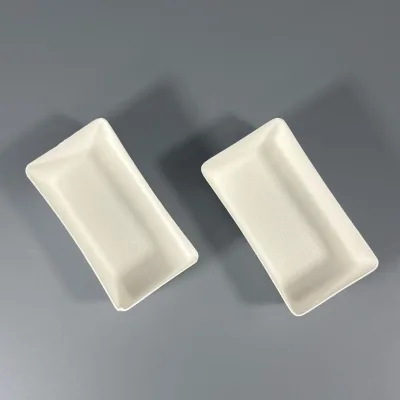
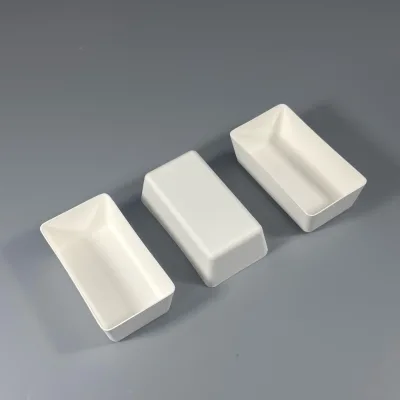
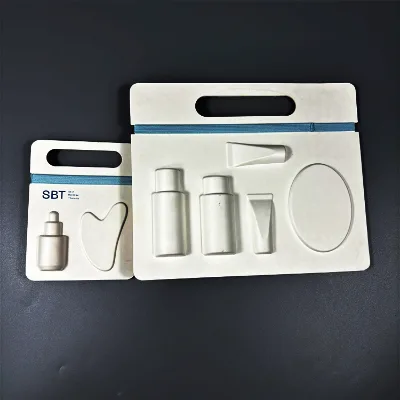
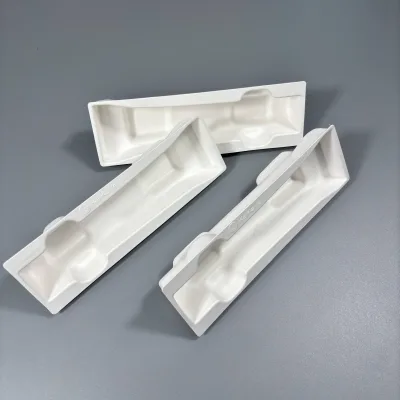
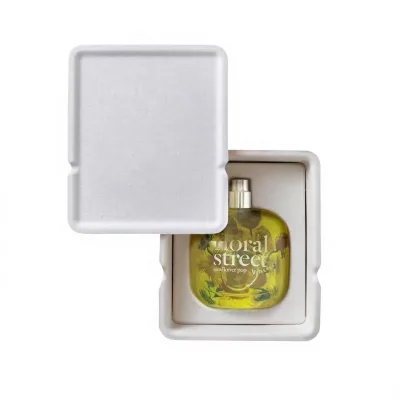
Wet pressed pulp molded packaging is highly versatile, making it suitable for a broad spectrum of beauty applications. The primary use case identified is "Cosmetic" industrial use, specifically for "Molded Pulp Packaging Trays" and "Wet Press Molded Pulp Inserts." These components are ideal for holding foundation bottles, serum vials, and compact powder cases, providing cushioning that prevents breakage during shipping and handling.
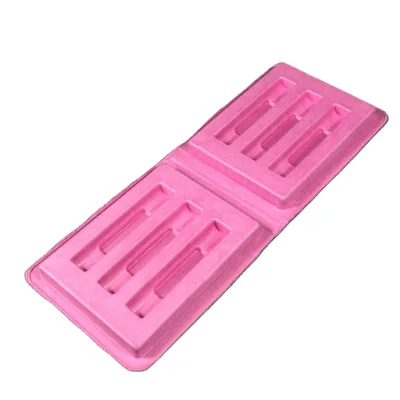
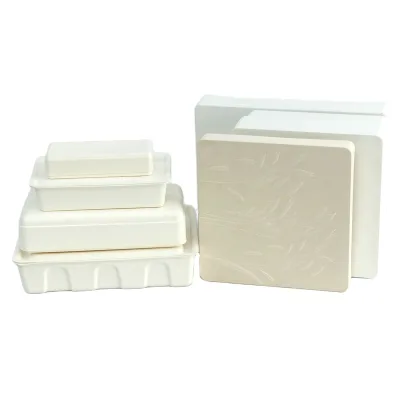
The design flexibility of this material is a major advantage. The "Shape" is listed as "Customized Shape," allowing manufacturers to create intricate cavities that snugly fit unique product geometries. Furthermore, the "Foldable" nature of some pulp styles suggests potential for flat-pack shipping, which reduces storage space and shipping volume before the customer unpacks the product. This feature is particularly valuable for brands with complex supply chains that require efficient warehousing.
Logo and design integration is another key application area. Suppliers offer various printing and finishing techniques, including "Embossed," "debossed," "Hot Stamping," "Four-Color Printing," and "UV" printing. These methods allow brands to apply their logos and branding directly onto the packaging, enhancing the unboxing experience. The "Logo&Design: Design Accepted" attribute confirms that suppliers are generally open to custom artwork, but buyers must ensure that the printing technique chosen does not compromise the structural integrity or biodegradability of the pulp.
Supplier Evaluation and Quality Control
Selecting the right supplier requires a multi-faceted evaluation process. The "Place of Origin" for many suppliers is identified as "Guangdong, China," a major manufacturing hub for packaging. While this region offers a robust supply chain, buyers should not assume uniform quality across all vendors. The "Brand Name" associated with some listings, such as "BonitoPak," indicates that established players exist, but buyers should conduct due diligence on any potential partner.
Quality control should focus on the consistency of the "Wet Press Pulp Molding" process. Variations in fiber density can lead to weak spots or inconsistent thickness. Buyers should request samples that have undergone stress testing to ensure they can withstand the weight of the cosmetic products without deforming. Additionally, the "Printing Handling" methods must be evaluated for durability; embossed or debossed logos should not flake or fade over time.
When evaluating suppliers, buyers should verify their capacity for "Custom Order" fulfillment. The ability to handle "Design Accepted" requests efficiently is a sign of a mature manufacturing partner. It is also essential to check the supplier's inventory management and "Lead Time" capabilities, although specific lead times are not provided in the general data. A reliable supplier should be able to provide a clear timeline from design approval to mass production, ensuring that the buyer's product launch schedules are met.
Long-Term Procurement and Sustainability Strategy
For long-term success, procurement strategies must align with the brand's sustainability goals. The "Feature" of "Recycled Materials" and "Pulp Style: Recyclable" suggests that these products can fit into a circular economy model. However, the distinction between "Recyclable" and "Biodegradable" must be clearly defined in the procurement contract. If a brand commits to a "100% Biodegradable" promise, the supplier must provide evidence that the specific product formulation meets these criteria under standard composting conditions.
The "Model Number" system used by suppliers, such as PM-322-110402 or PM-022, indicates a structured product catalog. Buyers should work with suppliers to establish a standardized naming convention that aligns with their internal inventory systems. This facilitates easier reordering and quality tracking over time. Furthermore, as regulations evolve, suppliers must be prepared to adapt their materials and processes. A long-term partnership should include clauses for regular updates on material compliance and environmental performance.
In conclusion, sourcing wet pressed pulp molded beauty packaging requires a balance of technical precision, environmental verification, and strategic cost management. By focusing on the specific attributes of wet pressing, material composition, and design flexibility, buyers can secure high-quality packaging that meets both functional and sustainability requirements. The market offers a wide range of options, from standard slotted boxes to custom-shaped inserts, but success depends on rigorous supplier evaluation and clear communication of specifications. As the industry moves towards more sustainable solutions, wet pressed pulp remains a cornerstone technology for the future of beauty packaging.
FAQs
What material is used for wet pressed pulp molded beauty packaging?
The primary material is recycled paper pulp or cellulose acetate, processed via mechanical pulping. Some listings specify paperboard types, while others use cellulose acetate for specific biodegradable formulations. Buyers must verify the exact fiber source for each order to ensure compliance with sustainability goals.
Can I customize the shape and color of these molded pulp trays?
Yes, the shape is fully customized and custom colors are accepted for branding alignment. Suppliers offer foldable styles and specific dimensions like 14*10*6 cm or 148*70*16mm. Buyers should confirm that any dyes used are non-toxic and compliant with international safety standards for cosmetic contact.
What is the typical minimum order quantity for wet pressed pulp packaging?
The minimum order quantity ranges from 10 to 10,000 units depending on the supplier and model. Specific high-volume data points indicate an MOQ of 5,000 pieces for certain standard models. Small batch orders may incur higher per-unit costs due to fixed mold creation and machine setup expenses.
How are logos and designs applied to the molded pulp surface?
Logos are applied using embossing, debossing, hot stamping, four-color printing, or UV printing techniques. These methods allow for direct branding while maintaining structural integrity. Buyers must ensure the printing technique chosen does not compromise the biodegradability or durability of the pulp under stress.
Which environmental certifications should I verify for biodegradable claims?
Buyers must distinguish between recyclable and truly biodegradable or compostable products under specific conditions. Claims like 100% biodegradable should be backed by third-party test results rather than marketing assertions. Request valid certificates of analysis and compostability testing reports before finalizing any contract to ensure regulatory compliance.
What is the price range for wet pressed pulp molded beauty packaging?
The observed price range spans from 0.06 to 3.90 USD per unit, reflecting differences in complexity and size. Costs are heavily dependent on customization and order volume, with economies of scale benefiting large orders. Buyers should calculate total landed costs including shipping weight and secondary packaging like slotted boxes.